


Galvanized to PEX/Copper: When Repiping Pays Off (and How to Phase It Room by Room)
If your home still has galvanized steel supply lines, you already know the symptoms: brown “first draw” water, weak showers, temperature swings when someone flushes, and surprise leaks at rusty unions. Galvanized pipes corrode from the inside out; minerals narrow the diameter until pressure and flow drop across the whole house. At some point, constant spot-repairs cost more—in time, money, and stress—than a planned repipe.
This guide shows you how to decide if repiping is the smarter move, which material (PEX or copper) fits your home, and how to phase the project room by room so you don’t need to open every wall at once. When you’re ready for a walk-through and a clear bid, start with All Services. If you’re juggling timelines and just need quick scheduling help, tap Contact.
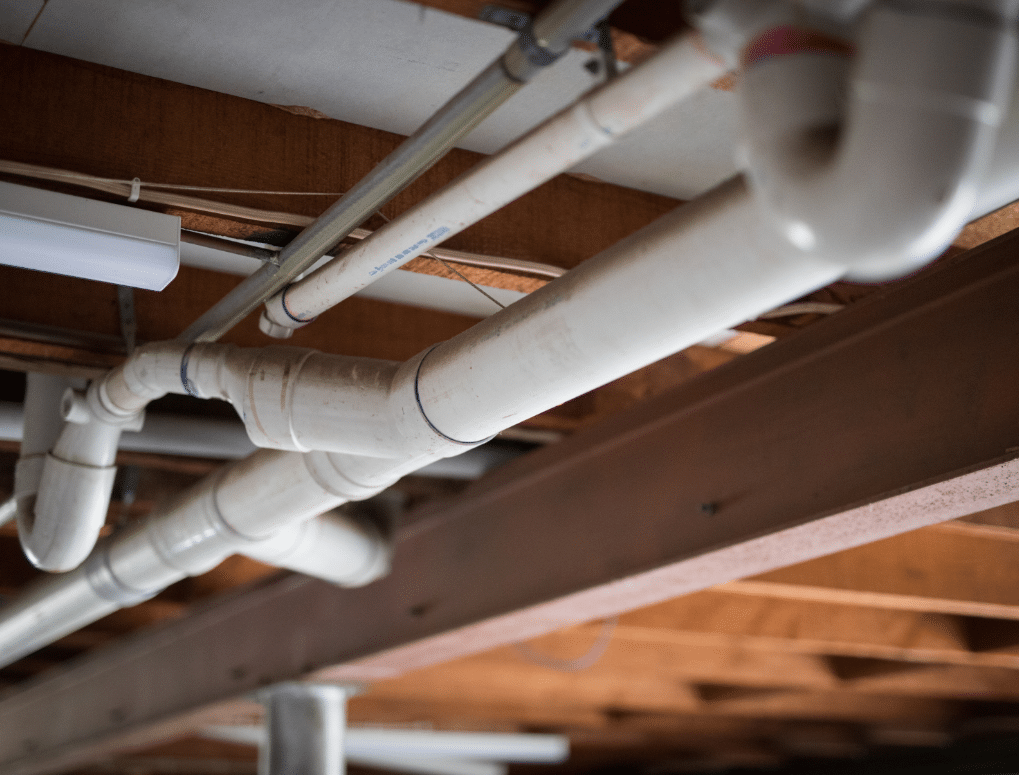
Do you really need a repipe? (7 reliable signs)
Low pressure at multiple fixtures — especially upstairs showers.
Rusty or gray water on first draw, then it clears after a few seconds.
Frequent leaks at threaded joints or shutoff valves that won’t seal.
Temperature swings when another tap opens (restriction amplifies changes).
Noisy pipes/water hammer from undersized, partially blocked runs.
Mixed patchwork: bits of copper/PEX spliced into old galvanized everywhere.
Insurance/inspection flags on aging steel lines.
If you’re nodding to three or more, it’s time to plan—before a ceiling stain or holiday no-hot-water day forces your hand.
PEX vs. Copper: how to choose (plain-English version)
PEX (cross-linked polyethylene)
Pros: Fewer fittings inside walls, flexible “home-run” layouts, excellent for phasing, resists scale and quiets water hammer.
Best use: Attics, crawlspaces, long runs, and homes where we want minimal drywall impact.
Notes: UV-sensitive (don’t leave exposed outdoors), protect from rodents in some crawlspaces, follow local codes for stub-outs and transitions.
Copper (Type L)
Pros: Time-tested, UV-stable, thrives in mechanical rooms/garages, crisp transitions and clean look at water heaters and manifolds.
Best use: Vertical risers, exposed/mechanical spaces, and where local aesthetic or code preferences favor copper.
Notes: More fittings, higher material cost, needs skillful sweating (we do that in-house).
Hybrid wins often: Copper at the heater/manifold, PEX for distributed runs. You get durability where it’s exposed and flexibility where it’s hidden.
The phasing plan: repipe without turning your home into a jobsite
You don’t have to do it all in one week. Here’s a homeowner-friendly order that delivers fast wins and keeps daily life moving.
Phase 1 — Mechanical core & main shutoff (Day 1)
Replace the main shutoff with a quarter-turn ball valve; add PRV if pressure is high and verify the expansion tank for water-heater protection.
Install a central manifold (or trunk line) near the water heater.
Convert immediate heater connections to copper with proper dielectric unions, then distribute PEX “home runs” as we phase future areas.
Why first: Stabilizes pressure, protects the heater, and gives us clean tie-in points for later phases.
Phase 2 — Kitchen + nearest bath group
New hot/cold runs to the kitchen sink, dishwasher, and ice maker.
Repipe the closest bath group (lav, shower, toilet) on the same side of the house.
Add new stop valves and braided supplies at fixtures.
Payoff: Instant improvement where you feel it daily—better kitchen flow and stable shower temps.
Phase 3 — Laundry & utility fixtures
Repipe washer box, laundry sink, and any garage/utility hose bibs.
Verify standpipe height/trap/vent and upgrade washer hoses to braided stainless.
Payoff: Prevents the classic laundry leaks that ruin floors and baseboards.
Phase 4 — Remaining baths (one at a time)
Open the smallest practical access, route new PEX, and set new quarter-turn stops.
If you’re remodeling later, we rough-in now to minimize rework.
Payoff: Room-by-room completion with short downtime per bathroom.
Phase 5 — Exterior hose bibs & future-proofing
Replace hose bibs (frost-free, properly anchored) and label any interior shutoffs.
Map and tag the system so future repairs are fast and clean.
Payoff: Winter-friendly outdoor fixtures and a clearly documented system.
Trunk-and-branch vs. home-run manifolds
Home-run (manifold): One line from the manifold to each fixture = fewer hidden joints, easy isolation, perfect for phasing.
Trunk-and-branch: One main line with short branches to each fixture = fewer total lines, good in tight retrofits with limited space.
We’ll recommend the layout that keeps drywall impact low and serviceability high.
What to expect during a phased repipe
Daily water restore: We stage work so you have water mornings/evenings.
Small, neat access holes: We cut clean rectangles and handle patches; you’re not left with Swiss-cheese walls.
Photo log & labels: Every phase is documented for your records (and insurance).
Code upgrades included: Proper supports, nail plates, arrestors where required, heater pan/drain verification.
Smart add-ons while we’re there
Whole-home shutoff labeling with a printable tag everyone can follow.
Fixture shutoffs (quarter-turn) at every sink/toilet.
Leak sensors under the heater, behind the washer, and at the most vulnerable sinks.
Recirculation loop (where layout and heater allow) for faster hot water at distant baths.
Water quality plan if hard water is chewing up fixtures (soften or condition).
“Will this really fix my pressure?” (and other honest answers)
Yes—when the cause is galvanized restriction. New, smooth-bore lines restore diameter and tame pressure swings when multiple fixtures run.
If your city pressure is extreme or the PRV is failing, we correct that too; otherwise the new lines still suffer.
Expect quieter plumbing: PEX and proper strapping reduce hammer and resonance.
Common concerns (so you don’t have to ask)
How long does each phase take?
Kitchen + one bath is commonly a short window; laundry is even faster. We plan phases around your calendar so you can keep living in the house.
Will my walls be destroyed?
No. We use attic/crawl paths and closets/backsides of cabinets whenever possible. Holes we do cut are tidy and patched.
Can we keep a mix of old and new for a while?
Yes—phasing is designed for that. We isolate finished branches at the manifold so old sections don’t contaminate new.
Do I have to pick PEX or copper everywhere?
No. Hybrids are common: copper at the heater and exposed risers, PEX everywhere else.
What about permits/inspections?
We handle permits and inspections end-to-end and build to local code.
Budget clarity without surprises
Your price depends on fixture count, access, finish level, and phasing. Our bids show: scope per phase, fixture list, patch/restore details, and any recommended upgrades (PRV, expansion tank, heater connections). No guesswork, no “oh-by-the-way” adders at the end.
Quick DIY checks before we visit (helps the plan)
Take photos of your water heater, main shutoff, and any visible galvanized runs.
Note which fixtures are the weakest (and when—AM vs PM).
List upcoming remodels; we’ll rough for them now to save you money later.
Then book a walk-through via All Services. If a line is actively leaking, go straight to Contact so we can stabilize it and keep ceilings dry while we plan the repipe.
FAQs
Can we repipe one bathroom and leave the rest?
Absolutely—that’s the point of phasing. We isolate the new work at the manifold and come back for the next zone when you’re ready.
Is PEX safe for drinking water?
Yes—approved, inspected, and widely used. We follow manufacturer and code requirements for fittings and support.
Will new pipes fix my rusty water?
Yes, if galvanized scale is the source. If the water discoloration is from the utility or a well issue, we’ll discuss filtration.
Do you replace every visible valve and supply line?
We recommend it. New quarter-turn stops and braided supplies complete the reliability upgrade.
Bottom line
If you’re chasing leaks, fighting weak showers, and seeing rusty water, a planned, phased repipe to PEX/copper is the cleanest way to reset your home’s plumbing—without tearing the whole house apart. Start with a quick assessment and a room-by-room plan through All Services. Need to coordinate dates or get on the calendar fast? Message us through Contact and we’ll slot the first phase at a time that works.