


Tankless vs. Traditional Water Heaters in Idaho Homes (Real-World Recovery, Not Hype)
If you’ve ever stood in a lukewarm shower while the washer ran, you already know water heater “capacity” is only half the story. In Idaho, cold inlet temperatures in fall and winter make recovery the real battleground—how fast your system reheats new water after you’ve used what’s ready. This guide compares tankless and traditional tank heaters using real-world Idaho scenarios, then lays out sizing, maintenance, and when each option makes the most sense.
When you’re ready for a right-sized recommendation (not a guess), book Water Heaters Service. If you want to discuss timelines or financing, send a note through Contact.
Free resource: ENERGY STAR’s water heater pages offer helpful, non-salesy tech basics and buyer tips.
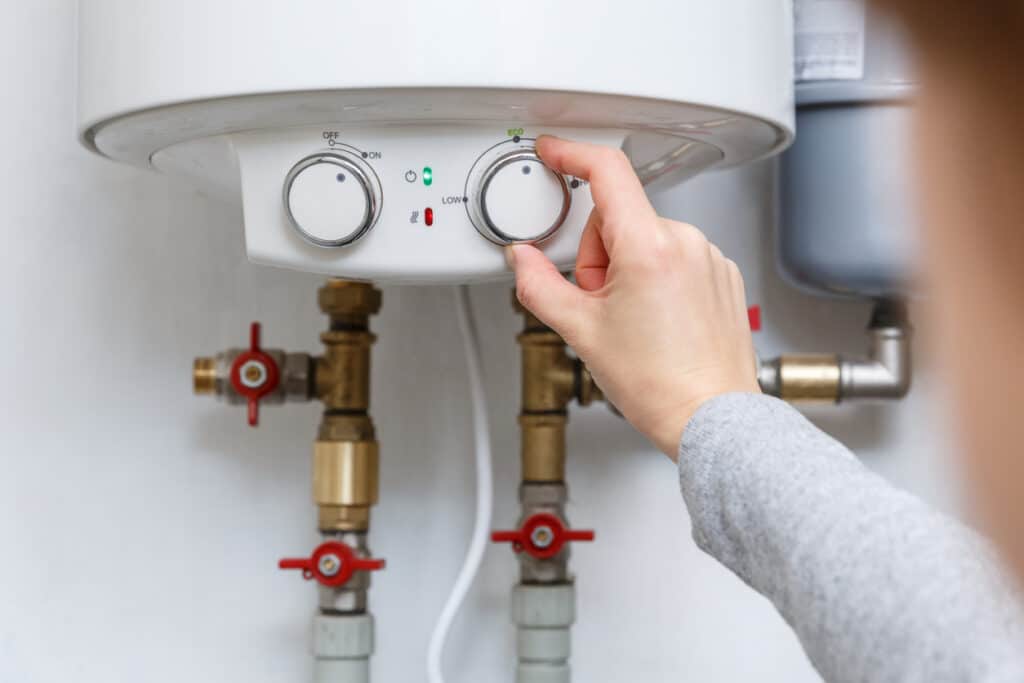
The Idaho Factor: Cold Inlet Temps Change Everything
In winter, incoming water to Boise/Meridian homes can be very cold, which means any heater has to work harder to raise temperature to a comfortable setpoint. The colder the inlet, the slower the recovery (tanks) or the lower the maximum flow at full temperature (tankless). Keep that in mind as you compare options.
How Each System Actually Works (and Fails)
Traditional Tank (gas or electric)
What it does well: Stores a set volume of hot water ready to go. Delivers strong, steady flow to multiple fixtures at once—until the tank is depleted.
Where it struggles: After a long shower + dishwasher cycle, you wait for reheat. Sediment builds on the bottom (gas) or elements (electric), slowing recovery and causing rumble/popping.
Best fits: Families who shower in staggered windows, homes with big simultaneous flows (tub fills), or situations where low upfront cost matters most.
Tankless (gas or electric, whole-home)
What it does well: Provides continuous hot water as long as total flow stays within the unit’s heat capacity. Very compact; no tank standby losses.
Where it struggles: Cold inlet temps reduce max hot-water gallons per minute (GPM). If you open too many fixtures at once in winter, the unit either reduces temperature or flow. Needs annual maintenance to keep the heat exchanger efficient.
Best fits: Households that run longer showers or back-to-back showers, smaller mechanical spaces, or owners who value efficiency and space saving.
Real-World Scenarios in Idaho
Two back-to-back showers, then a dishwasher cycle
Tank (properly sized): Both showers are fine; dishwasher starts pulling heat out of the tank. If the tank is small or heavily sedimented, the third user may feel a temp dip.
Tankless (right capacity): Unlimited showers are fine; turning on the dishwasher at the same time may push the GPM limit in winter—drop the shower flow slightly and you’re golden.
Filling a large soaking tub
Tank: Wins on instant volume if the tank is large and hot.
Tankless: Will fill it, but at a rate capped by winter GPM; total fill time can be longer.
Teenagers + laundry Saturday
Tank: Recovery lag becomes noticeable unless the tank is sized up and flushed yearly.
Tankless: Keeps up indefinitely if the household staggers high-flow fixtures a bit.
Guest suite over the garage (long run)
Either system benefits from a recirculation plan for faster hot at the tap. Many modern tank and tankless models support built-in or add-on recirc pumps.
Sizing That Actually Works (no regrets)
A quick quiz we use during [Water Heaters Service]:
How many simultaneous showers do you truly need in winter?
Any large tubs or body-spray showers?
Typical showerhead flow rates (2.0–2.5 GPM or water-saving 1.5)?
Do you run appliances during showers?
Tank guideline: Choose capacity to cover your busiest 30–40 minutes. Add headroom if you have teens or big tubs.
Tankless guideline: Size for your winter flow needs at full setpoint. We calculate GPM at your inlet temperatures so you don’t buy a unit that only meets the brochure spec in summer.
Operating Costs & Efficiency (big picture)
Tanks: Some heat “stands by” and is lost to the room; insulation quality matters. Newer high-efficiency tanks and heat-pump water heaters (HPWH) cut those losses dramatically.
Tankless: No standby loss; high combustion efficiency on gas models. Electric tankless for whole-home is often impractical due to breaker capacity—great at point-of-use, though.
We’ll estimate annual energy use for your household patterns during Water Heaters Service so you’re picking based on total cost, not just sticker price.
Maintenance Cadence (quiet, efficient, long-lasting)
Tanks (gas/electric)
Annually: Flush; check anode; test TPR; verify expansion tank/PRV.
Signs you’re due: Rumbling/popping, TPR drip, slow recovery.
Tankless (gas)
Annually: Descale heat exchanger, clean inlet screens, check condensate, verify gas supply and venting.
Signs you’re due: Temperature swings at steady flow, error codes, reduced max GPM in winter.
Keep the visit on a simple schedule—same time you swap HVAC filters or before holiday guests.
Space, Installation, and Venting
Tankless: Small wall unit, concentric vent, needs proper gas sizing (often upsized). Great for tight utility rooms or to free floor space.
Tank: Larger footprint; simpler fuel and vent requirements for standard-efficiency models. HPWH needs air volume and condensate routing—best in garages/utility spaces.
We’ll check clearances, vent routes, gas meter capacity, and condensate options during a no-guesswork site visit.
Reliability & Lifespan
Both systems last longest with proper pressure control. We test PRV and expansion tank on every install.
Tanks typically have a shorter but predictable life; tankless can outlast when maintained—but is more sensitive to water quality and scaling.
Hard water? A conditioner/softener plus regular flushing protects either choice.
Which Should You Choose?
Choose a Traditional Tank if you:
Want the lowest upfront cost and simple service
Need high flow to multiple fixtures at once (big families, tub fills)
Have space for a larger insulated tank or are considering an HPWH for efficiency
Choose a Tankless if you:
Prefer endless showers and compact equipment
Can stagger a couple of high-flow fixtures in winter
Value efficiency and have a good spot for venting and condensate
Hybrid approach: Some homes install a tankless plus a small buffer tank or use recirculation for instant hot at distant taps. We’ll design what fits your layout and habits.
Honest Cost Drivers (so quotes make sense)
Fuel type and meter/breaker capacity
Venting route and wall/roof penetrations
Recirculation loop or dedicated return line
Water quality (need for treatment)
Permit and code-upgrade items (pan, seismic straps, drain, expansion tank)
We quote these line by line so you can compare apples to apples.
FAQs
Will tankless give me unlimited hot water in winter?
Yes—within its design GPM. Oversizing correctly for winter inlet temps is the key.
Is an HPWH a good option here?
Often, yes—especially in garages or large utility rooms. It’s quiet, efficient, and pairs well with a recirc pump for comfort.
Can I keep my old tank as a backup?
We usually recommend a clean swap; mixing old tanks into new systems invites reliability issues. If redundancy matters, we’ll design it correctly.
What about water pressure?
High static pressure damages both systems. We test/adjust PRV and set your expansion tank charge to match.
Bottom Line
Tank = volume, Tankless = endurance.
Idaho’s cold inlet temps change the math—size for winter, not brochure weather.
Maintenance keeps either choice quiet, efficient, and long-lived.
Want a side-by-side, house-specific plan with clear pricing? Book Water Heaters Service. Prefer to talk through options or schedule an in-home assessment? Tap Contact and we’ll set a time that works.