


High Water Pressure = Hidden Damage: How to Test and Set Your PRV Right
High water pressure feels great in the shower—but it quietly wrecks water heaters, supply lines, ice makers, cartridges, and toilets. In Boise/Meridian, we regularly see homes sitting well above a healthy range, especially after utility work or PRV (pressure-reducing valve) fatigue. Here’s a simple, no-drama guide to test your pressure, set (or replace) your PRV, and match your expansion tank so leaks and TPR drips don’t come back.
If you want us to map, test, and dial everything for you, book All Services. If you have an active leak or a water heater relief valve is dumping right now, go straight to Emergency Plumbing.
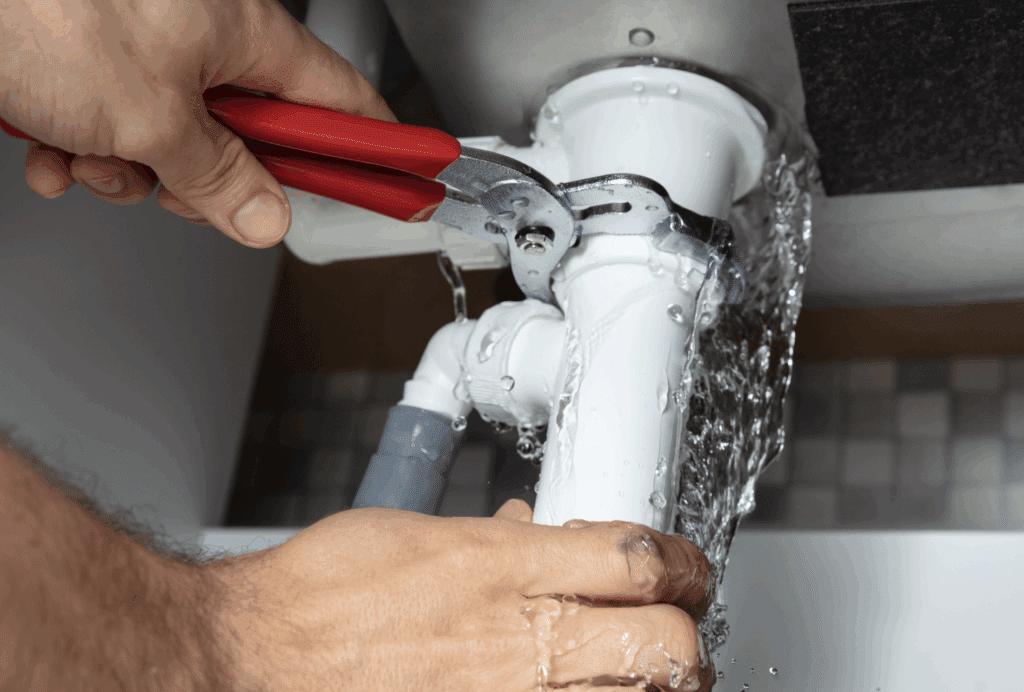
Why high pressure is a problem (fast version)
Shortens appliance life: faucets, toilets, dishwasher/washer valves
Triggers water hammer & noisy pipes
Overheats the water heater system: TPR valve weeping, early tank failure
Finds weak spots: braided lines, angle stops, filter housings
The 5-minute gauge test (static pressure)
What you need: an inexpensive hose-bib gauge with a red “max” needle.
Pick a cold hose bib or laundry faucet.
No water running anywhere in the house.
Thread on the gauge; open the bib fully.
Read static pressure (PSI). Press the reset to zero the red “max” needle.
Leave it for a few hours (or overnight). If the red needle climbs, thermal expansion is spiking pressure.
Target range: Generally 50–60 PSI is the sweet spot for homes. Consistent readings over ~75 PSI call for PRV service/replacement and an expansion tank check.
Quick dynamic test (how your system behaves under use)
Keep the gauge on.
Open a shower (hot/cold).
Watch the gauge while flowing—40–60 PSI under flow is comfortable.
If it plummets, you may have restriction issues (old galvanized, undersized pipes, clogged filters), not just a pressure problem.
Find your PRV (and understand what it does)
Look near the main shutoff where the city line enters—often garage, crawlspace, or utility room. The PRV knocks city pressure down to a safer house pressure and holds it steady.
Signs your PRV is tired:
Unstable pressure (high one day, low the next)
Water hammer even with arrestors
Fixtures fail early; heater TPR drips
PRV date/code shows it’s older than ~10–15 years
Safe PRV adjustment (small turns, big effect)
If your gauge shows extreme pressure or the valve looks corroded/leaky, don’t adjust—replace. We can do this quickly via All Services.
Open a faucet slightly (so you’re adjusting “under flow”).
Loosen the lock nut on the PRV stem.
Turn the stem clockwise to increase, counter-clockwise to decrease (most models).
Go in ¼-turn steps, then recheck at the gauge.
Tighten the lock nut; verify static/dynamic readings again.
Settle around 55–60 PSI static. That’s friendly to fixtures and still feels great.
Expansion tank: match it or your TPR will keep dripping
Closed systems (most homes) need an expansion tank to absorb thermal growth when the water heater runs. If the tank bladder loses air, pressure spikes.
How to check:
Turn off the water heater and cold inlet to the tank.
Open a hot faucet to drop line pressure to zero.
Use a tire gauge at the expansion tank Schrader valve—charge should equal your home’s static PSI (e.g., 58 PSI house → 58 PSI tank).
If water comes out of the Schrader or it won’t hold air, the tank’s failed—replace it.
We always set PRV and expansion as a pair so the system stays quiet and dry.
Common symptoms & the right fix
| Symptom | Likely Cause | Fix |
|---|---|---|
| TPR valve dripping at water heater | High pressure / flat expansion tank | Set PRV to ~55–60 PSI, recharge/replace expansion tank |
| Hammer when washer/dishwasher closes | High pressure + no/failed arrestors | Set PRV, add/replace arrestors, secure piping |
| Angle stops/toilet fill valves fail early | Overpressure | PRV service/replacement |
| Gauge’s red needle climbs overnight | Thermal expansion | Expansion tank charge/replace; verify PRV setpoint |
| Great pressure, then sudden drops | Restriction (scale/galvanized) | Camera/line assessment; consider repipe or filter change |
When to replace the PRV (not just adjust)
Body is corroded, leaking, or seized
Adjustments won’t hold for more than a week or two
House stays above safe PSI even at minimum setpoint
Age + symptoms (over ~10–15 years)
We replace with a full-port ball valve at the main, new unioned PRV for easy future service, and verify the expansion tank and heater safety devices.
Simple prevention that sticks
Keep a hose-bib gauge in a drawer; check spring/fall.
Replace rubber washing machine hoses with braided stainless.
Label the main shutoff so anyone can kill water fast in an emergency.
Add leak sensors under the heater and behind the washer.
FAQs
Is higher than 80 PSI dangerous?
It’s above typical residential code and accelerates failures. Set it lower and confirm your expansion tank.
Why does my pressure spike only at night?
Thermal expansion plus the city main’s nighttime pressure rise. Match the expansion tank charge and verify the PRV.
Do tankless/HPWH systems change the target pressure?
No—the healthy house range stays similar. Proper pressure actually protects modern heaters and valves.
Bottom line
Test with a gauge, set a realistic PSI, and match your expansion tank. Do that once and you’ll stop nuisance leaks, noisy pipes, and heater TPR drips—while extending the life of every fixture in the house.
Want a quick, guaranteed tune with documentation? Book All Services. If something is actively leaking or you’re seeing a constant relief-valve dump, call Emergency Plumbing and we’ll stabilize it today.