


Heat-Pump Water Heaters in Cold Garages: Winter Modes, Noise, and Condensate Fixes
Heat-pump water heaters (HPWHs) are fantastic at cutting energy use—until winter hits and your garage feels like a walk-in fridge. If your HPWH lives in the garage (common in Idaho), you’ve probably noticed longer heat-up times, more fan noise, and sometimes a puddle where condensate froze and backed up. The good news: a few smart settings and low-cost tweaks can keep hot water steady, quiet the unit, and protect the drain line all winter.
If you want an expert to tune settings, add ducting, or fix a stubborn condensate issue, schedule Water Heaters Service. Need help choosing or relocating a unit? Tap Contact and we’ll map options with photos and pricing.
Free resource to include in your post: ENERGY STAR Heat Pump Water Heater User Guides (great owner tips on modes, filters, ducting, and maintenance).
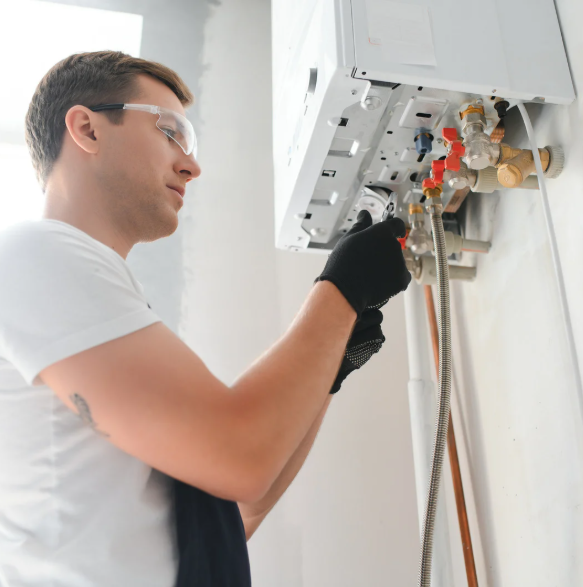
Why garages are tough on HPWHs
HPWHs pull heat from the surrounding air. In summer, that’s free efficiency and bonus dehumidification. In winter, a cold garage gives the heat pump less to work with. The unit will:
Run the backup electric elements more often (or ask you to select a “hybrid” mode).
Blow chilly air back into the garage, which can cool the space further.
Produce more condensate as it wrings moisture from cold air—exactly when lines are most likely to freeze.
Your winter plan should cover three things: mode selection, airflow management, and condensate protection.
1) Mode selection: “Hybrid” is your winter friend
Most modern HPWHs offer several modes (names vary by brand): Heat Pump Only, Hybrid/Efficiency, and Electric/High Demand.
Hybrid (recommended in winter): Lets the compressor run first but adds resistance heat when the garage is cold or demand is high. You keep efficiency without long recovery waits.
Heat Pump Only (use sparingly in winter): Highest efficiency, slowest recovery in a cold garage. Great for mild weather or low-demand households.
Electric/High Demand (short-term use): Fastest recovery if company arrives or you’re catching up after laundry + showers—just don’t leave it here all season.
Pro tip: If your unit supports schedules, set Hybrid during the day and a slightly warmer setpoint the hour before peak shower times. If the garage gets frigid overnight, you can let the setpoint dip a few degrees and recover in the morning.
2) Airflow: give the heat pump air it can use (and keep noise down)
Clearances and filters
Keep the intake and exhaust areas clear; don’t stack bins around the unit.
Clean the air filter monthly in winter—cold air shows dust faster and starves the fan.
Ducting options (simple, effective)
If the garage feels too chilled—or you want less noise—many HPWHs support 6–8″ duct collars:
Bring intake air from indoors (mechanical room) and exhaust to the garage.
Or bring intake from the garage and exhaust outdoors, so you don’t keep cooling the garage.
Keep duct runs short and smooth; use lined flex or acoustic elbows to reduce whoosh.
Important: Always maintain adequate makeup air for the space. A starved HPWH gets louder, runs longer, and can pull air from places you don’t want (like a furnace flue zone). If in doubt, we’ll calculate volume and add a passive grille.
Noise & vibration fixes
Add vibration isolation pads under the feet.
Use flexible water connectors and keep piping off rigid wall contact.
If wall-mounted lines buzz, add a cushioned clamp.
For ducted units, support ducts so they don’t drum, and avoid 90° metal elbows right at the blower.
3) Condensate: don’t let winter freeze your hot water
An HPWH is also a dehumidifier; it can make gallons of condensate over a day. In a cold garage, that water loves to freeze at the worst spot—the trap or the exterior termination.
Your winter checklist:
Slope matters. Make sure the condensate line slopes continuously to the drain. Any belly becomes an ice plug.
Keep the trap indoors. If there’s a P-trap, it should be inside the conditioned space or within the garage near the unit—not outside on a cold wall.
Short exterior run. If the line terminates outdoors, keep the outside section short and protected, or better, reroute to an interior drain (washer standpipe, floor drain, or a condensate pump to a proper receptor).
Heat-tape vulnerable sections. A few feet of listed heat cable with insulation prevents freeze-ups at exterior stubs. Add a GFCI outlet if required.
Use a neutralizer if needed. If you’re draining to a concrete floor drain or into materials sensitive to acidic condensate, add a small condensate neutralizer cartridge.
What to watch for: gurgling, splashy sounds in the tank base, or a pan with standing water—all early signs a line is partially blocked. Clear it before a shutdown code appears.
Quick homeowner tune (15 minutes)
Filter: Remove and clean; reinstall dry.
Mode: Set to Hybrid for the season; verify setpoint.
Space check: Clear intake/exhaust zones; confirm nothing leans on the tank.
Condensate: Confirm continuous slope; feel the line on a cold morning for ice.
Pan & sensor: Test the pan sensor (if equipped) and verify the pan drain isn’t blocked.
Noise: If you hear new humming, check for copper touching framing and add a cushion clamp.
When your HPWH “sounds different” in winter
Whoosh / louder fan: Usually restricted intake or a clogged filter.
Intermittent clicking or compressor tone: Normal during defrost and mode changes—shouldn’t be constant.
Rattle: Often a loose sheet-metal panel or unsecured duct. Tighten screws and add foam tape on seams.
Hammer at start/stop: Add hammer arrestors on the hot outlet if you see line slap; also check house pressure and PRV setting.
If noise persists after these checks, we can add pads, adjust ducts, and verify compressor mounts during Water Heaters Service.
Placement questions we get a lot (garage edition)
“Can I build a closet around it to quiet the space?”
Yes—just size the closet for required air volume and add a louvered door or ducted intake/exhaust. We often line the closet with acoustic board and run a short outdoor exhaust.
“Will the HPWH make my garage too cold?”
It will cool and dehumidify the space. Ducting the exhaust outdoors or running Hybrid mode mitigates the chill. Another trick: schedule the unit to heat water mid-day, when garage temps are higher.
“Is garage air safe for intake?”
Keep the unit away from vehicle exhaust and solvents; store paints and fuel in sealed containers. If there’s a combustion appliance nearby, verify combustion air and ensure the HPWH won’t create negative pressure that backdrafts another appliance.
Small upgrades that make a big difference
Smart scheduling/control: Use the app or control panel to set Hybrid + time-of-day boosts before showers or laundry.
Recirc optimization: If you have a recirc pump, add a smart timer or demand button. Less run time = less unintended garage cooling.
Insulate first 6 feet of hot and cold lines at the tank to reduce standby losses.
Quiet kit: Pads, cushioned clamps, lined flex duct—low cost, big comfort win.
Condensate pump with float alarm when no gravity drain exists; we route to an approved receptor and add a drip loop and check valve.
Troubleshooting at a glance
| Symptom | Likely Cause | What to Do |
|---|---|---|
| Long reheat time | Garage air too cold; Heat Pump Only mode | Switch to Hybrid, clean filter, consider short intake duct from indoors |
| New puddle / pan wet | Frozen or sagging condensate line | Re-slope, relocate trap indoors, add heat tape or condensate pump |
| Garage feels extra cold | Exhaust blowing into garage | Duct exhaust outdoors or to a ventilated area; use Hybrid schedule |
| Fan louder than usual | Dirty/restrictive filter or tight closet | Clean filter, add makeup air or ducting |
| Occasional lukewarm showers | Undersized mode for demand | Pre-boost setpoint before peak shower window; check elements in service visit |
When to call a pro
You’ve had freeze-ups or shutdown codes related to condensate.
The unit is in a tight closet and needs ducting/math on air volume.
You hear persistent rattles or the garage resonates after a recent install.
Recovery never meets your family’s needs even in Hybrid (possible sizing or element issue).
You want to relocate the unit from the garage to a utility space.
We’ll check pressure, expansion tank charge, mode/schedule, air volume, and the entire condensate path. You’ll get a short report with photos and recommendations (keep/monitor, adjust, or upgrade).
Bottom line
HPWHs in cold garages can be quiet, reliable, and efficient with three winter moves: run Hybrid mode, manage airflow (clearances, filter, optional ducting), and protect condensate from freezing. Do those, and you’ll keep hot water steady while still banking the efficiency gains that make hybrids worth it.
Want us to winterize and quiet yours in one visit—or spec the right model for your garage? Book Water Heaters Service. Questions about placement, ducting, or rebates? Tap Contact and we’ll walk you through the options.