


Trenchless vs. Dig-and-Replace: How to Choose the Right Sewer Fix for Your Yard
When a mainline fails, you’ve got two big paths: keep your yard intact with a trenchless repair—or open a trench and replace the bad section the traditional way. The right choice isn’t guesswork. A 30–60 minute camera inspection tells you what failed, where, and how badly—then the decision becomes simple and cost-smart.
What the camera actually decides
A recorded sewer camera (ideally with depth and footage markers) answers five questions that determine the fix:
Material: Clay, Orangeburg, PVC/ABS, cast iron, or a mix?
Defect type: Roots at joints, offset joints, cracks, belly (sag), deformation/collapse, grease/scale.
Extent: One joint? 6–10 feet? 60 feet?
Shape: Still round, or egg-shaped/flattened?
Slope & depth: Is there standing water? How deep is the line under drives/trees/walls?
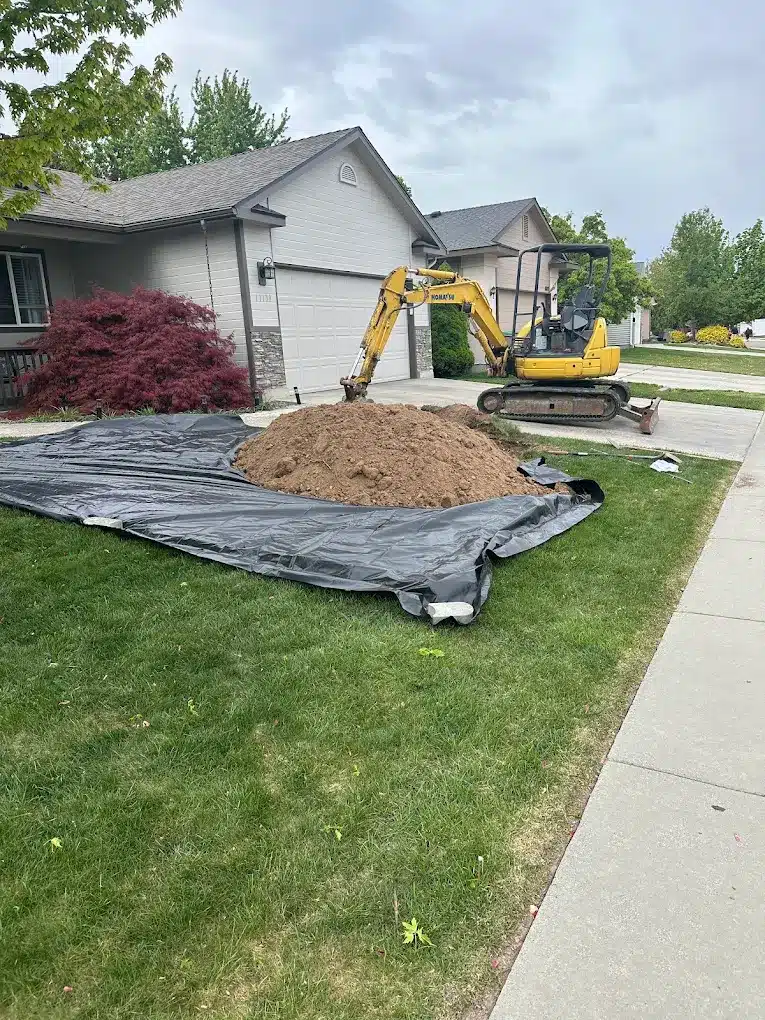
Trenchless Options (yard-friendly)
1) CIPP Lining (“pipe within a pipe”)
A resin-soaked liner is inverted through the old pipe, cured in place, and trimmed at tie-ins—creating a smooth, watertight new pipe.
Best for
Clay with rooty/leaky joints over long stretches
Minor cracks with adequate slope and round shape
Homes where landscaping, pavement, or mature trees make digging painful
Pros
Minimal digging; usually 1 day
Seals many joints at once; smooth interior improves flow
Often the most economical for 30–80 ft of jointed clay
Limitations
Won’t fix bellies (liner follows the sag)
Needs the host pipe to be round and stable
Laterals/taps must be reinstated cleanly (pro tooling matters)
2) Pipe Bursting (new pipe, old path)
A bursting head splits the old line while pulling in a new HDPE/PVC pipe along the same route. Requires a small entry and exit pit.
Best for
Orangeburg (deformed/ovalized) or crushed segments
Mixed materials with bad sections near the street tap
When you want a full-strength new pipe without an open trench
Pros
Replaces shape and strength in one go
Handles moderate offsets, cracks, and deformation
Usually 1–2 days; far less surface restoration
Limitations
Needs straightish runs and safe clearance from other utilities
Not ideal across tight, complex bends
Still requires utility locates and two pits
Dig-and-Replace (open-cut)
Cut out only what’s failed or replace a long run with new pipe at the correct slope.
Best for
Bellies/low spots (shape problem → must correct grade)
Short, accessible failures (e.g., one bad joint under lawn)
Complex transitions, multiple bends, or very shallow depth
When you’re already excavating for other work
Pros
Restores proper slope and bedding
Great for spot repair (3–10 ft)
Unlimited access for fittings, cleanouts, and valve additions
Limitations
Surface disruption (landscape/hardscape restoration)
Longer timeline when depths, roots, or utilities complicate access
Quick chooser: defects → best fix
| Defect / Condition | Lining (CIPP) | Bursting | Open-Cut |
|---|---|---|---|
| Roots at many clay joints | Excellent | Good | Good |
| Single offset/cracked joint | Possible, but overkill | Possible | Best (spot) |
| Deformed/oval Orangeburg | Poor | Best | Good |
| Long cracks, pipe still round | Excellent | Good | Good |
| Belly/low spot (standing water) | ❌ | ❌ | Required |
| Mixed materials + short bad transition | Okay | Good | Best (targeted) |
| Under driveway, trees, patio | Great | Great | Disruptive |
What “price” and “timeline” usually hinge on
Length of affected pipe (not your whole lateral)
Depth and obstacles (driveway, roots, retaining walls)
Restoration (landscape, concrete, asphalt)
Utility locates and permits lead time
Access for equipment and crew
A camera with locate/depth lets you avoid replacing good pipe—the biggest hidden savings.
Real Treasure Valley scenarios (and what we recommend)
A) 55 ft of clay with roots every 3 ft; good slope
Plan: Jet roots, CIPP line house-to-tap, reinstate tie-ins. Yard intact; 1 day.
B) 18 ft Orangeburg pancake near the street; standing water
Plan: Pipe burst that segment to the tap. If a belly remains, short open-cut to correct grade.
C) One offset at PVC-to-clay transition under lawn
Plan: Spot open-cut (3–6 ft), proper transition fitting, add cleanouts.
D) Long belly under driveway
Plan: Open-cut to restore slope and compact bedding. Lining won’t help; bursting would copy the sag.
Our “diagnose → decide” workflow (one visit)
Restore flow if needed (auger/jet).
Camera the line house-to-tap; record and mark depths/locations.
Defect map with footage ranges (e.g., 42–56 ft rooty clay; 76–84 ft belly).
Side-by-side options (lining vs bursting vs spot open-cut) with timelines and restoration notes.
Written plan + video links so you can compare bids apples-to-apples.
Schedule: We line/burst/open-cut with in-house crews so you’re not waiting weeks.
Permits, cleanouts, and future service
We handle permits/locates and city approvals.
Add upstream/downstream cleanouts during the repair—future maintenance becomes quick and inexpensive.
If we install a backwater valve or new tap, we place a serviceable box at grade and show you how to inspect it.
FAQs
Will lining reduce my pipe diameter?
Slightly, but the smooth interior and sealed joints usually increase flow versus a rough, root-filled original.
Can you line through a belly?
No. Lining follows the host shape. Bellies require open-cut to correct slope.
What about warranties?
We warranty materials and workmanship for the method we install (details in writing). Lined and burst pipes have excellent track records when prepped correctly.
Is trenchless always cheaper?
Often—especially under driveways, patios, or large landscapes. For a short, shallow failure in dirt, open-cut can be the budget move.
How soon can I use the line after trenchless?
Typically same day after cure/proof test for lining; immediately after bursting/open-cut once connections are verified.
Bottom line
Camera first reveals the real problem.
Match fix to defect:
Lining for long, leaky clay or cracked, round pipe.
Bursting for deformed/failed segments you want fully replaced.
Open-cut for bellies, short accessible breaks, or slope correction.
Add cleanouts and choose the smallest effective scope—save your yard and your budget.
Ready for a clear plan—with video proof and side-by-side options? Start with Sewer Repair. If you already have estimates and want a second opinion or scheduling, ping Mainline Repair or Contact and we’ll lock in your best path forward.