


Why Does My Toilet Keep Running After I Flush It?
The toilet flushed normally.
Nothing overflowed.
Nothing clogged.
So the homeowner walked out of the bathroom and didn’t think about it again.
Ten minutes later, he walked past the door.
Water was still running.
He stopped.
Listened.
Yep.
Definitely the toilet.
He went back inside, lifted the tank lid, stared at everything for a few seconds, and did what people have been doing to troublesome toilets for years.
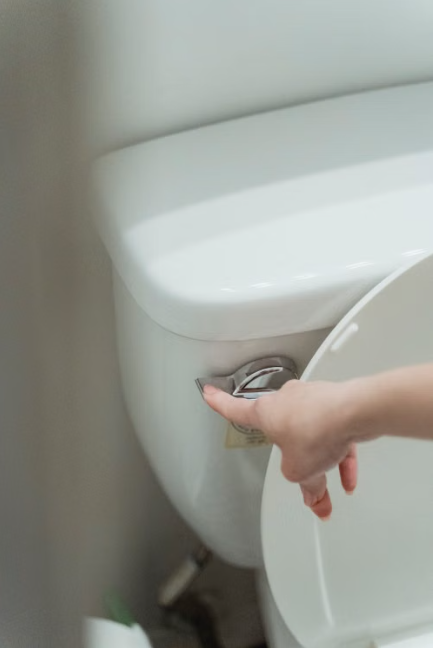
He jiggled the handle.
The water stopped.
“Good enough.”
The next morning, it happened again.
Flush.
Walk away.
Water keeps running.
Jiggle the handle.
Silence.
By the end of the week, everyone in the house knew the routine.
“Did you jiggle it?”
It had basically become part of using the bathroom.
That’s usually how a running toilet gets ignored.
It isn’t dramatic.
There isn’t water spreading across the floor.
The toilet still flushes.
Nobody has to stop using the bathroom.
You just hear water running longer than it should.
Then one day you realize you’ve been jiggling that handle for three months.
A toilet that continues running after a flush isn’t something you should have to learn to live with. Sometimes the cause is surprisingly small. Other times, a toilet that runs on and off can waste water quietly enough that the first real clue shows up on the water bill.
If your toilet in Nampa won’t settle down after you flush it, A+ Drain Cleaning and Plumbing provides toilet repair and other plumbing services throughout Nampa and the surrounding Treasure Valley.
First, How Long Are We Talking?
A toilet isn’t completely silent immediately after you flush it.
Water has to refill the tank.
That takes a little time.
What we’re talking about here is different.
You flush.
The toilet refills.
Then the water keeps going.
Maybe it runs continuously.
Maybe it stops after five minutes.
Or perhaps everything becomes quiet, only for the toilet to suddenly start filling again twenty minutes later when nobody has touched it.
That last one can be especially confusing.
You’re sitting in the living room.
Nobody is in the bathroom.
Then you hear it.
The toilet starts running by itself.
One homeowner joked that his bathroom was haunted.
Fortunately, plumbing usually has a less interesting explanation.
Sometimes the Handle Really Is Telling You Something
That little handle jiggle people do isn’t completely meaningless.
If moving the handle makes the toilet stop running, something connected to that handle may not be returning to its normal position after the flush.
Inside the tank, several small parts have to work together.
You press the handle.
The toilet flushes.
Water leaves the tank.
Then everything needs to settle back into place so the tank can refill and stop.
If one part doesn’t quite make it back where it belongs, water can keep moving.
That’s why the famous handle jiggle sometimes works.
The problem is that you’re not really fixing anything.
You’re helping the toilet complete something it should be doing on its own.
Once or twice might not bother anyone.
Doing it after every flush gets old quickly.
Open the Tank and Look
You don’t have to dismantle anything.
Just take the tank lid off carefully and watch what happens during a flush.
This is one of the few plumbing problems where homeowners can often see quite a bit without touching much at all.
Flush once.
Watch.
Does something seem to stay open?
Does the chain look caught?
Does water continue flowing long after the tank appears full?
Maybe you’ll notice something obvious.
Maybe you won’t.
Either way, don’t start taking apart components if you’re not comfortable putting them back together.
Observation is enough.
Knowing what the toilet does immediately after a flush can be useful when you eventually describe the problem.
That Rubber Piece at the Bottom Does a Lot of Work
Inside many toilet tanks is a rubber component commonly called a flapper.
It opens when you flush so water can leave the tank.
Then it closes again.
Pretty simple.
Except it does this over and over and over.
Year after year.
Eventually, rubber doesn’t stay new forever.
It can wear.
It can become stiff.
It may stop creating the same seal it once did.
When that happens, a small amount of water can continue escaping from the tank into the bowl.
The toilet senses that the tank needs more water.
So it fills again.
And there you have it.
A toilet that seems to randomly turn itself on.
Nothing supernatural required.
The Chain Can Be Annoyingly Simple
Sometimes the issue is almost embarrassingly small.
The chain inside the tank can be too tight.
Too loose.
Caught.
Twisted.
It may occasionally keep the flapper from sitting correctly.
One homeowner had been dealing with an unpredictable running toilet for weeks.
Some days it worked perfectly.
Other days it ran after nearly every flush.
The inconsistency made the problem seem much more complicated than it really was.
That’s something worth remembering about toilets.
A tiny component can create a surprisingly irritating problem.
Then There’s the Fill Valve
The fill valve controls the water coming into the toilet tank after you flush.
You probably don’t think about it because, when everything works properly, there’s no reason to.
Flush.
Whoosh.
Tank refills.
Done.
But when the fill valve begins behaving differently, you may hear water running longer than usual.
The tank may struggle to reach the correct level.
Or the water may continue when it should have stopped.
This is another reason replacing random parts isn’t always the best first move.
A running toilet has several possible causes.
Figuring out which part is actually responsible can save a lot of frustration.
Hard Water Doesn’t Exactly Help
Nampa homeowners are already familiar with mineral buildup.
You see it around faucets.
On showerheads.
Across glass doors.
Sometimes around fixtures that never seem to stay clean for long.
A+ Drain Cleaning and Plumbing specifically identifies hard water as a local concern and notes that mineral buildup can affect household plumbing and fixtures.
Those minerals don’t limit themselves to the parts of your bathroom you can see.
Components inside plumbing fixtures can also age, wear, and collect deposits over time.
That doesn’t mean every running toilet in Nampa is caused by hard water.
It simply means water conditions can be part of the larger story, especially when several fixtures are showing buildup or behaving differently.
For homes dealing with ongoing mineral issues, the company’s Water Treatment Services page is a useful internal link to include here.
The Toilet That Runs Only at Night
This one gets people’s attention.
Everything is quiet.
You’re trying to fall asleep.
Then…
Whooooosh.
The toilet starts filling.
Nobody used it.
A few minutes later, it stops.
Maybe it happens again at 2 a.m.
The toilet isn’t necessarily running more often at night.
You may simply notice it because the house is quiet.
During the day, televisions, conversations, appliances, traffic, and everything else can hide the sound.
At night, a toilet filling itself down the hallway sounds incredibly loud.
If this keeps happening, don’t dismiss it just because the toilet still flushes normally.
Water is moving for a reason.
The Water Bill Might Notice Before You Do
This is where a running toilet stops being a funny household quirk.
Water that keeps moving through the toilet doesn’t disappear from your utility usage just because nobody intentionally turned it on.
A toilet that runs frequently can quietly add unnecessary water use over time.
A+ already has a very relevant article about this: Why Your Water Bill Suddenly Spikes in Nampa ID and What It Usually Means.
That blog is perfect to insert naturally here.
A higher bill doesn’t automatically mean the toilet is responsible.
Irrigation changes, household usage, leaks, and other factors can all affect water consumption.
But if the bill rises around the same time your toilet develops a habit of running by itself, those two things are worth considering together.
Listen When Nobody Is Using Water
Here’s something simple you can do.
Wait until the house is relatively quiet.
Make sure nobody is showering.
No dishwasher running.
No washing machine.
Then listen.
Do you hear water?
If you do, figure out where it seems to be coming from.
A running toilet is often easy to recognize once you’re listening for it.
But if you hear water and can’t identify the source, that’s different.
A+ has already covered that situation in Hidden Water Leaks in Your Home: Signs You Shouldn’t Ignore. That guide notes that hearing water when nothing is running, unexpected water bill increases, damp areas, unusual smells, and pressure changes can all be clues worth investigating.
That’s another internal blog that fits naturally here without forcing it.
A Running Toilet Is Different From a Bubbling Toilet
This is worth clearing up because homeowners sometimes use the words interchangeably.
A running toilet usually involves water continuing to refill or move after a flush.
A bubbling or gurgling toilet is different.
That’s more about strange movement or sounds in the bowl, often while other plumbing fixtures are being used.
If your toilet isn’t simply running but instead makes bubbling or gurgling noises when someone showers or does laundry, the drainage system may deserve attention.
A+ has an existing guide on Gurgling Toilets in Nampa ID, as well as a separate article about toilets bubbling or showers backing up after laundry. Those symptoms can point toward restrictions affecting drainage or airflow rather than the components inside the toilet tank.
Same toilet.
Very different problem.
What If the Toilet Starts Overflowing?
Now we’re no longer talking about an annoying running sound.
If the bowl is filling instead of draining, stop flushing.
Repeatedly pushing the handle and hoping the next flush fixes everything can make a bad situation considerably messier.
A+ has a full guide explaining what to do when a toilet overflows in Nampa, including why continuing to flush isn’t a good idea.
If you’re dealing with a toilet that won’t stop overflowing or another plumbing situation where water needs to be stopped quickly, it’s also worth knowing where your home’s shutoff is located. Their guide on how to shut off water before a plumbing problem gets worse is a useful resource to keep bookmarked.
Hopefully, you’ll never need it.
That’s exactly the kind of information that’s better to learn before the bathroom floor is wet.
Should You Just Replace the Toilet?
Not necessarily.
A running toilet doesn’t automatically mean the entire fixture has reached the end of its life.
Sometimes a relatively small internal component is responsible.
Other times, the age and condition of the toilet may make replacement worth discussing.
The important part is knowing what actually failed before deciding.
Replacing an entire toilet because of one worn component can be unnecessary.
On the other hand, repeatedly repairing an old fixture with several ongoing problems may not make much sense either.
That’s where an inspection helps.
The Problem With Getting Used to It
This happens more than people admit.
“Just jiggle the handle.”
Guests are told.
Kids know.
Everyone adapts.
Eventually, the running toilet becomes one of those odd little things about the house.
Like the drawer that doesn’t close properly.
Or the door you have to lift slightly before locking.
Except this particular quirk involves water.
That’s the difference.
A toilet that keeps refilling isn’t merely making noise.
It’s using water every time it does it.
The longer that becomes normal, the easier it is to forget that the toilet wasn’t designed to work that way.
What A+ Drain Cleaning and Plumbing Will Want to Know
You don’t need to identify the broken component before calling.
Just describe what the toilet is doing.
Does it run continuously?
Does it stop when you jiggle the handle?
Does it start filling again when nobody has used it?
How long has this been happening?
Has your water bill changed?
Are there other plumbing symptoms around the house?
Does the toilet gurgle or bubble too?
Those details help separate a straightforward toilet repair from something involving another part of the plumbing system.
A+ Drain Cleaning and Plumbing lists toilet repair among its plumbing services and serves Nampa along with communities throughout the Treasure Valley.
If you’re tired of reminding everyone to jiggle the handle, contact A+ Drain Cleaning and Plumbing and have the toilet checked.
Frequently Asked Questions
Why does my toilet keep running after I flush?
A running toilet can happen when one of the components inside the tank doesn’t close, seal, or stop filling the way it should. Worn flappers, chain problems, fill valve issues, and other tank components are common places to investigate.
Why does jiggling the handle stop my toilet from running?
Moving the handle can sometimes help an internal component return to the position it should have reached after the flush. If you have to do this regularly, something inside the tank likely needs attention.
Why does my toilet randomly run when nobody uses it?
Water may be slowly escaping from the tank, causing it to refill periodically. If the toilet repeatedly turns itself on throughout the day or night, have it checked.
Can a running toilet increase my water bill?
Yes. A toilet that repeatedly refills can waste water over time. If you’ve also noticed an unexpected bill increase, the running toilet is worth investigating.
Is a running toilet the same as a gurgling toilet?
No. Running usually involves the tank continuing to fill or refill. Gurgling and bubbling can involve drainage or venting conditions elsewhere in the plumbing system.
Do I need a new toilet if mine keeps running?
Not always. The problem may involve a replaceable internal component. A plumber can determine whether repair or replacement makes more sense based on the toilet’s condition.
When should I call a plumber?
If the toilet runs repeatedly, won’t stop filling, has become unreliable, or the problem appears alongside leaks, unusual water usage, or other plumbing symptoms, it’s a good idea to have it inspected.
Final Thoughts
A running toilet rarely starts as the biggest problem in the house.
That’s why it’s so easy to ignore.
You flush.
It keeps running.
You jiggle the handle.
Problem solved.
Until the next flush.
Eventually, everyone learns the routine and nobody thinks much about it anymore.
But your toilet shouldn’t need instructions.
It shouldn’t randomly refill in the middle of the night.
And you shouldn’t have to wonder whether the water bill is creeping upward because one little component inside the tank refuses to cooperate.
Sometimes the repair is simple.
Sometimes the toilet is old enough that a larger conversation makes sense.
Either way, knowing what’s actually happening is better than spending another six months telling everyone:
“Just jiggle the handle.”
If your toilet keeps running after every flush, A+ Drain Cleaning and Plumbing can help get the bathroom back to being quiet again.