


Why Is There Water Under My Bathroom Sink?
You open the bathroom cabinet looking for an extra roll of toilet paper.
Instead, you find a damp bottle of cleaner.
Then you notice the bottom of the cabinet looks darker than usual.
You touch it.
Wet.
Not soaked. Not flooded. Just wet enough to make you stop and stare at the pipes for a second.
That is usually how this problem starts.
There is no dramatic spray of water. No puddle running across the bathroom floor. No obvious broken pipe hanging loose.
Just a little water under the sink.
And the first thought is usually something like:
“Where is that even coming from?”
That question can be surprisingly tricky because water has a way of traveling. A drip may start at the faucet, run along a connection, follow a pipe, and finally collect somewhere completely different.
So the wet spot you see is not always directly underneath the actual problem.
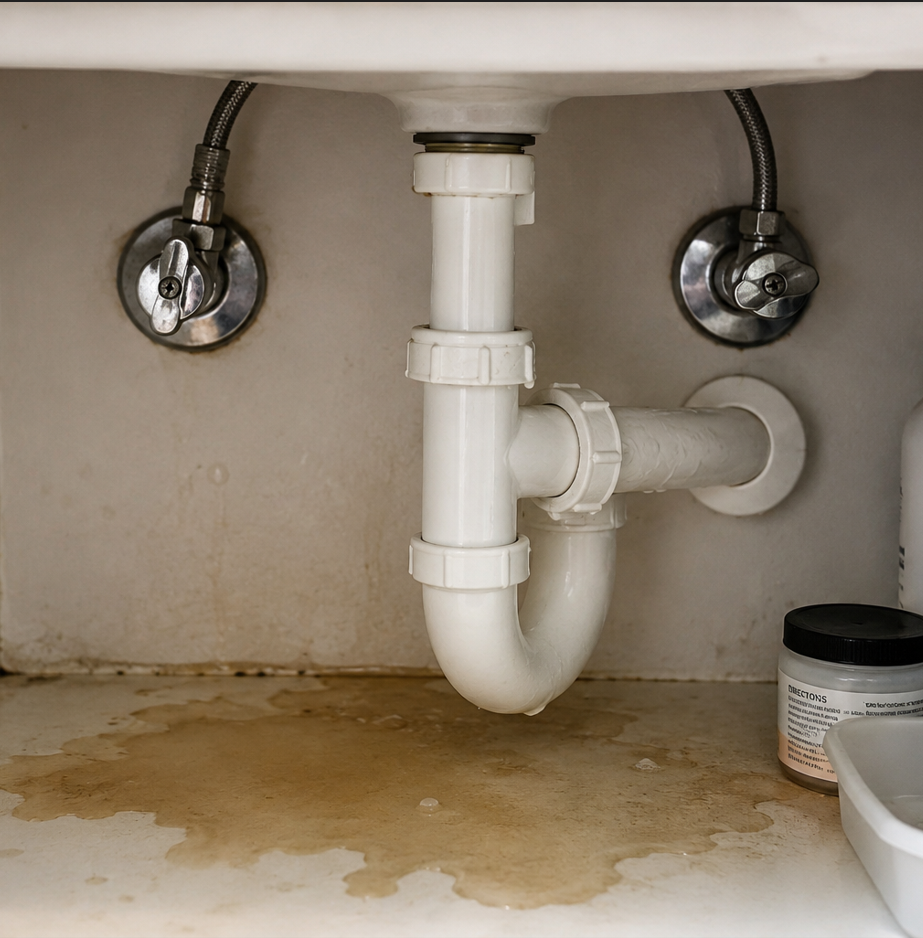
If you live in Nampa and you keep finding moisture under your bathroom sink, A+ Drain Cleaning and Plumbing can help track down the source. Their Leak Detection Services are designed to locate plumbing leaks before they turn into larger problems. A+ notes that leaks can lead to staining, mold growth, higher water bills, and other property damage when they sit unnoticed.
Before assuming the worst, though, there are a few simple things you can look at.
Start by Emptying the Cabinet
This sounds almost too simple, but do it.
Take everything out.
Cleaning bottles.
Hair products.
Toilet paper.
Whatever has been living under there for the last three years.
Then dry the cabinet completely.
Use a towel and get the bottom, the plumbing connections, and the underside of the sink as dry as you reasonably can.
Now you have a clean starting point.
If everything is already wet, it can be hard to tell where a fresh drip begins.
Once the cabinet is dry, run the faucet and watch.
Sometimes the problem becomes obvious within thirty seconds.
Other times, nothing happens at all.
That tells you something too.
Does the Water Appear Only When the Faucet Is Running?
This is one of the first clues worth paying attention to.
Turn on the faucet.
Let the water run for a minute or two.
Look underneath the sink.
Watch the drain pipe.
Look around the faucet connections.
Check the shutoff valves.
If water appears only while you’re using the sink, the problem may be somewhere along the faucet or drain system.
If the cabinet stays dry while the faucet runs but becomes wet later when nobody is using it, that’s a different pattern.
You do not need to know the name of every fitting.
Just notice when the water shows up.
That timing is useful.
The Faucet Can Leak From Above and Show Up Below
This one confuses people all the time.
You look under the sink and see water.
Naturally, you assume a pipe underneath must be leaking.
But sometimes the water starts above the countertop.
Water can work its way around the base of the faucet, through a loose connection, or around an opening in the sink.
Then gravity does the rest.
It runs underneath.
Now you’re looking at a drip beneath the basin even though the problem actually started up top.
Try drying everything around the faucet.
Then turn it on.
Move the handle normally.
Splash a small amount of water around the faucet base.
Watch underneath.
If you see moisture forming directly beneath that area, you may have found the path.
This is especially common when a faucet has been loose for a while or the seal around it has deteriorated.
Check the Supply Lines
Under most bathroom sinks, you’ll see small water supply lines running from the shutoff valves up to the faucet.
Those connections can leak too.
Sometimes it’s obvious.
You see a drop hanging from the fitting.
Other times the leak is so small that it takes several minutes before enough water collects to notice.
Run your fingers around the connection if it’s safe and accessible.
Better yet, use a dry piece of tissue or paper towel.
It can reveal a tiny amount of moisture much faster than your hand.
If the paper suddenly turns wet at one specific connection, you’ve learned something useful.
Do not start aggressively tightening fittings just because you see a drop.
Overtightening a connection can damage parts or turn a small problem into a larger one.
If you’re unsure, this is exactly the kind of plumbing issue worth having inspected.
Do Not Forget the Shutoff Valves
Those little valves under the sink spend most of their lives being ignored.
They sit there quietly for years.
Then one day you notice a drop hanging from one.
Older valves can begin leaking around the stem or connection.
Sometimes they also become stiff and difficult to turn.
That matters because the shutoff valve is supposed to help you stop water to the fixture when something goes wrong.
If the valve itself is leaking or won’t move, you suddenly have two problems instead of one.
A+ has a helpful guide on How to Shut Off Water in Your Home Before a Plumbing Disaster Gets Worse. The company specifically mentions leaks under sinks as one of those situations where knowing how to stop the water quickly can prevent more damage.
One important note from that guide: if an older shutoff valve will not turn, do not force it aggressively. A stuck valve can break.
What About the Drain Pipe?
Now let’s look at the part most people blame first.
The drain.
Run the sink and watch the pipe underneath.
If the leak appears only when water is draining, the connection may be somewhere around the P trap or another drain fitting.
Sometimes a connection has loosened.
Sometimes a washer has worn out.
Sometimes the pipe has shifted slightly after something stored in the cabinet bumped it.
Yes, that happens.
People pack these cabinets full of bottles, bins, hair dryers, toilet paper, and cleaning supplies.
Then someone shoves one more bottle into the back.
It presses against the drain.
Nothing happens that day.
A few weeks later, there’s water in the cabinet.
If your sink is also draining slowly, that’s worth mentioning too. A+ provides Drain Cleaning Services in Nampa for clogs and drainage problems. Their site notes that unpleasant odors, slow drainage, and other drain issues can indicate buildup or blockage.
A slow drain and a leaking drain connection are not necessarily the same problem, but if both are happening, tell the plumber.
The P Trap Is Easy to Blame Because You Can See It
That curved section of pipe under the sink gets a lot of attention.
Mostly because it’s right there.
If water is dripping from the bottom of it or from one of its connections, the source may seem obvious.
But take a second before assuming.
Water may be running down from somewhere above and simply collecting on the P trap.
Dry the entire pipe.
Then watch where the first drop appears.
The first drop matters more than the final puddle.
That little trick can save you from staring at the wrong part of the plumbing.
What If the Cabinet Is Wet Even When Nobody Uses the Sink?
This deserves more attention.
Let’s say you dry everything before bed.
Nobody uses that bathroom overnight.
You check in the morning.
Wet again.
Now you’re probably not dealing with something that leaks only while water is going down the drain.
A pressurized water connection may be involved.
That could include a supply line, valve, faucet connection, or another nearby plumbing source.
It could also mean the water is coming from somewhere you haven’t noticed yet.
A+ points out that some leaks remain hidden in walls or other areas for weeks before homeowners see the damage. Their Leak Detection Services are intended for exactly those harder to locate situations.
If the cabinet keeps getting wet when the sink isn’t being used, I would not keep drying it and hoping it stops.
Find out why.
Could It Just Be Condensation?
Possibly.
But do not use condensation as the automatic explanation for every wet pipe.
Cold water pipes can sometimes collect condensation when warm, humid air contacts the cooler surface.
You’ll usually see moisture forming more broadly along the outside of the pipe rather than one specific drip coming from a fitting.
Wipe the pipe dry.
Watch what happens.
Does a light film of moisture slowly form along the surface?
Or does one distinct drop keep appearing from the same connection?
Those are different things.
We recently covered a related topic in Pipe Condensation in Summer: Is It a Leak or Normal?
That blog fits naturally here because homeowners sometimes struggle to tell the difference between surface moisture and an actual plumbing leak.
The safest approach is not to guess when the cabinet keeps getting wet.
Check the Bottom of the Sink Basin Too
Grab a flashlight.
Look underneath the actual sink bowl.
You may notice water around the drain opening.
Sometimes the seal where the drain assembly meets the sink can allow water to pass underneath.
That water can then travel down the drain body before dripping off somewhere lower.
From below, it may look like the pipe itself is leaking.
Again, water travels.
That’s why drying everything first makes such a difference.
You want to catch the beginning of the leak, not just where the water eventually lands.
Why a Small Leak Under the Sink Can Become a Bigger Deal
Here’s the problem with bathroom cabinet leaks.
They’re hidden.
If your kitchen faucet sprayed water across the counter every time you turned it on, you’d deal with it immediately.
A slow drip inside a closed cabinet?
That’s easier to forget.
You wipe it up.
Put the cleaning supplies back.
Close the door.
Three weeks later, the cabinet smells strange.
Then the wood starts swelling.
The finish bubbles.
Maybe you notice dark staining.
A+ warns that plumbing leaks can contribute to structural damage and mold growth when moisture remains hidden. They also list interior stains and musty odors among possible signs of water leaks.
The leak itself might be small.
The time it spends leaking is what causes trouble.
Pay Attention to the Smell Inside the Cabinet
This sounds strange, but open the cabinet and smell.
Does it smell normal?
Or musty?
Damp wood develops a pretty recognizable smell after a while.
If the cabinet smells musty even when it looks dry, there may have been moisture there longer than you realized.
Take everything out and look carefully at the bottom and back panels.
Check the wall around the plumbing openings.
Look for staining.
Swelling.
Peeling material.
Soft spots.
A small leak that started yesterday presents a different situation from one that’s been quietly soaking the cabinet for months.
Has Your Water Bill Changed?
A tiny bathroom sink leak is not always going to create a dramatic jump in the water bill.
Still, unexplained water use is another clue worth paying attention to.
If you’re finding leaks under sinks, hearing toilets run, or noticing other plumbing changes around the same time your water bill increases, the bigger picture matters.
A+ lists an unexplained rise in the water bill as one possible sign of a hidden leak.
One small wet cabinet may not explain everything.
But if you’re seeing multiple signs around the house, tell the plumber.
What If Water Is Coming Through the Back of the Cabinet?
This is where the simple under sink leak starts feeling less simple.
If the pipes and fittings under the sink look dry, but water seems to be coming from the wall or cabinet backing, you may be dealing with a concealed leak.
That is not a “tighten something and see what happens” situation.
Water inside a wall can spread before it becomes visible.
The stain you see may not be directly beside the leaking pipe.
That’s another reason professional Leak Detection in Nampa can be useful. A+ says its leak detection services are designed to locate hidden water problems without unnecessary damage to the home.
What If the Sink Starts Leaking Faster?
Maybe you’re watching a slow drip.
Then suddenly it isn’t slow anymore.
This is where knowing how to shut off the fixture matters.
If the leak is on the faucet or supply side and the shutoff valves work properly, shutting off water to the sink may stop the immediate problem.
If that does not work or you’re dealing with a more serious leak, knowing the location of your home’s main water shutoff becomes important.
Again, A+’s water shutoff guide is worth reading before you’re standing in a wet bathroom trying to figure it out.
This is one of those boring homeowner things that becomes incredibly useful at the exact moment you need it.
What If You’re Already Remodeling the Bathroom?
If the vanity is coming out anyway, that’s actually a good time to pay closer attention to the plumbing behind and beneath it.
Old shutoff valves.
Aging supply lines.
Corroded connections.
Drain fittings that have been patched before.
Sometimes removing an old vanity reveals issues nobody could see while everything was enclosed.
A+ provides Bathroom Remodeling Services in Nampa and handles bathroom plumbing changes, fixture installations, and plumbing relocations as part of remodeling projects.
If you’re already updating the bathroom, dealing with questionable plumbing before the new vanity goes in makes a lot more sense than discovering a leak afterward.
What A+ Drain Cleaning and Plumbing Will Want to Know
You do not need to know which fitting is leaking before calling.
Just tell them what you’ve noticed.
Does the cabinet get wet only when the faucet runs?
Does it happen when the sink drains?
Is the water there even when nobody uses the bathroom?
Can you see a drip from a supply line?
Is the shutoff valve wet?
Does the water seem to come from behind the cabinet?
Is the cabinet swollen or stained?
Has the leak become worse?
Does the sink drain slowly too?
Those little details help narrow things down quickly.
A+ serves Nampa and communities throughout the Treasure Valley and offers leak detection along with a full range of plumbing services.
Frequently Asked Questions
Why is there water under my bathroom sink?
Common possibilities include a leaking faucet connection, supply line, shutoff valve, drain fitting, P trap connection, drain seal, or a concealed plumbing leak nearby.
How can I tell where the leak is coming from?
Empty and dry the cabinet completely. Then run the faucet and watch for the first place fresh water appears. Check both the supply side and drain side.
Why does my sink leak only when I use it?
If the leak appears only while the faucet is running or water is draining, a faucet or drain connection may be involved. Watching exactly when the drip starts can help narrow down the source.
Why is the cabinet wet when nobody has used the sink?
That can suggest a leak on the pressurized water side or another hidden plumbing source. If moisture returns when the fixture is not being used, professional leak detection may be appropriate.
Can condensation make it look like my bathroom sink is leaking?
Yes, condensation can sometimes form on cold pipes. However, a consistent drip from one fitting or recurring cabinet moisture should not automatically be dismissed as condensation.
Should I tighten the leaking connection myself?
Be careful. Overtightening plumbing fittings can damage them. If you’re unsure which connection is leaking or how it should be repaired, having a plumber inspect it is safer.
When should I shut off the water?
If the leak is actively spreading, getting worse, or you are concerned about damage, shut off the appropriate water supply if you can do so safely. If you’re unsure how, A+’s guide to shutting off your home’s water is a useful resource.
When should I call a plumber?
Call when the leak keeps returning, you cannot identify the source, a valve or supply connection is leaking, water appears to be coming from the wall, or the cabinet is already showing signs of moisture damage.
Final Thoughts
Finding water under a bathroom sink is one of those problems that usually starts small.
You wipe it up.
Check again later.
Maybe it’s dry.
Then three days later, there it is again.
That is the part worth paying attention to.
Water does not need to be pouring across the floor to cause damage.
A slow drip hidden behind a cabinet door can sit there for a long time before anyone realizes what it has been doing.
So start simple.
Empty the cabinet.
Dry everything.
Run the faucet.
Watch when the first drop comes back.
Check whether it happens while the sink is running, while it’s draining, or even when nobody is using it.
And if the source still isn’t obvious, don’t keep guessing.
A+ Drain Cleaning and Plumbing provides Leak Detection Services in Nampa and throughout the Treasure Valley, helping homeowners find plumbing leaks before a damp cabinet turns into a much bigger repair.
You can also contact A+ Drain Cleaning and Plumbing to schedule service if that mystery puddle keeps coming back.