


Why Does My Water Heater Make Popping or Banging Noises?
The first noise sounded like something had fallen in the garage.
A homeowner in Nampa heard it from the kitchen one evening.
Pop.
Then silence.
He walked into the garage, looked around, and didn’t see anything on the floor.
Nothing had fallen from a shelf.
The garage door was fine.
So he went back inside.
About twenty minutes later, it happened again.
Pop.
This time he stood there for a while trying to figure out where it came from.
Still nothing.
It wasn’t until the following evening that he finally made the connection.
Someone had just finished taking a shower.
A few minutes later…
Pop.
Then a low rumbling sound.
He walked over to the water heater and listened.
“That’s coming from there.”
Suddenly, the mystery wasn’t quite as funny.
The water heater still worked.
Everyone had hot water.
There wasn’t anything leaking across the garage floor.
But a water heater that had spent years quietly doing its job had apparently decided to start making itself known.
If you’ve heard popping, banging, crackling, or rumbling sounds coming from your water heater, you’re definitely not the first homeowner to wonder what is going on.
Sometimes those noises develop gradually.
Sometimes they seem to appear overnight.
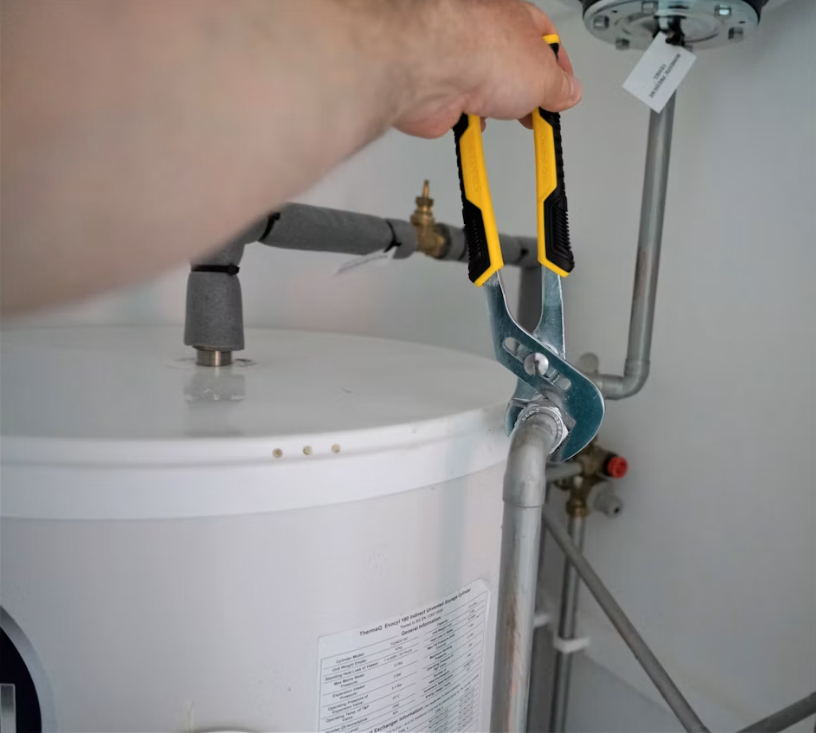
And in a place like Nampa, where hard water and mineral buildup are already familiar problems for homeowners, what’s happening inside the tank deserves a closer look. A+ has previously discussed how mineral buildup can affect water pressure and water heater performance in local homes.
If your water heater has suddenly become one of the loudest appliances in the house, A+ Drain Cleaning and Plumbing can help figure out why.
First, What Kind of Noise Are You Hearing?
This sounds like an obvious question.
It isn’t.
One homeowner says popping.
Another says knocking.
Someone else describes it as crackling.
Then another homeowner says:
“It sounds like somebody is boiling rocks in there.”
That’s actually a pretty useful description.
You don’t need to know the official plumbing word for the sound.
Just listen.
Is it a sharp pop every few minutes?
A low rumble?
A crackling noise while the water heater is heating?
A loud bang that seems to come from the pipes rather than the tank?
Those details matter because not every water heater noise comes from the same thing.
Sediment Can Collect Where You Can’t See It
Here’s one of the big reasons this problem catches homeowners off guard.
You can look at a water heater from the outside and everything seems perfectly normal.
The tank looks fine.
The connections look fine.
No water underneath it.
But you can’t see the bottom of the tank.
Over time, minerals and sediment can settle there.
This is particularly worth thinking about in areas with hard water.
A+ has already covered this issue in Can Hard Water Damage Your Appliances Over Time in Nampa ID? Their existing content also notes that hard water can contribute to mineral buildup that affects plumbing fixtures and water heater performance.
That’s why a noisy water heater and visible hard water deposits elsewhere in the house are worth considering together.
You might see white buildup around faucets.
Scale on the showerhead.
Spots that constantly return on glass.
Meanwhile, something similar is happening in places you can’t see quite as easily.
So Why Does Sediment Make Noise?
Imagine material sitting at the bottom of a tank while the water heater is trying to heat the water above it.
Water can become trapped around or underneath that buildup.
As the heater operates, that water heats.
Eventually, it works its way through the sediment.
That’s when homeowners may hear popping or rumbling.
It can sound much more dramatic than you’d expect from something happening inside a water tank.
The strange part is that the heater may continue producing hot water.
That’s why people ignore the noise.
“It still works.”
And that’s true.
But “still works” and “working exactly as it should” aren’t always the same thing.
The Noise May Be Worse After Someone Takes a Shower
This is how some homeowners finally make the connection.
The water heater seems quiet most of the afternoon.
Someone takes a long shower.
Then the noise begins.
That makes sense when you think about what the heater has to do next.
Hot water left the tank.
Cold water replaced it.
Now the system has to heat that new water.
If the noises happen mainly while the heater is actively heating, that’s useful information.
You don’t have to stand beside the tank all evening waiting for it.
Just pay attention to the pattern.
Does the noise tend to happen after showers?
After laundry?
After several people use hot water?
Those details help.
What If It Sounds More Like Banging in the Pipes?
That’s where we have to separate two different things.
A popping or rumbling noise that clearly comes from the water heater isn’t necessarily the same as a bang somewhere in the plumbing when water starts or stops.
Plumbing noises can travel through walls and floors.
Sometimes what sounds like the water heater is actually a nearby pipe.
We’ve already created a related guide about why pipes make noise when water is turned on, and that’s a natural internal link to include here.
If the noise happens when someone shuts off a faucet or an appliance stops using water, tell the plumber that.
If it comes directly from the water heater while the burner or heating elements are operating, mention that instead.
You don’t have to know the cause.
You just need to describe when it happens.
“It Never Used to Do This” Matters
This is one of the most useful things a homeowner can say.
Maybe the water heater has been in the house for years.
Quiet the whole time.
Then suddenly it starts rumbling.
That change matters.
The same is true if the heater has always made a faint sound but has recently become much louder.
Homes aren’t silent.
Plumbing isn’t silent.
Water heaters can make normal operating sounds.
But a new noise or a noticeable change in an old one deserves more attention than something the system has done since the day it was installed.
Has Your Hot Water Changed Too?
Now we’re getting another clue.
Maybe the noise isn’t the only thing you’ve noticed.
Hot water takes longer to arrive.
The shower doesn’t stay hot as long.
The temperature seems inconsistent.
You used to get two showers without thinking about it, and now the second person is rushing.
Those changes belong in the same conversation.
We just covered this in Why Does My Hot Water Take So Long to Reach the Faucet?
That article is a useful internal link here because sometimes homeowners begin with one complaint and then realize there are several.
The water heater is noisy.
Hot water performance has changed.
Maybe the unit seems to run more often.
One symptom is useful.
Three symptoms tell a much clearer story.
The Water Bill Can Occasionally Join the Conversation
A noisy water heater by itself doesn’t automatically mean your water bill will increase.
But if the heater is part of a larger plumbing problem, it’s worth looking at what else has changed.
A+ already has an excellent related article, Why Your Water Bill Suddenly Spikes in Nampa ID and What It Usually Means.
That blog specifically discusses how older water heaters with sediment buildup may become less efficient over time and also points out that hard water contributes to mineral buildup inside tanks in Nampa.
Again, don’t assume one strange pop means your utility bills are about to explode.
Just pay attention to patterns.
If several things changed around the same time, mention them.
Does Every Noisy Water Heater Need to Be Replaced?
No.
And this is where homeowners sometimes jump ahead.
They hear banging.
Search online.
Read three terrifying articles.
By lunchtime, they’re shopping for a brand new water heater.
Slow down.
Noise alone doesn’t tell you whether a water heater needs replacement.
The age of the unit matters.
Its condition matters.
How well it produces hot water matters.
Whether it leaks matters.
Its maintenance history matters.
And, of course, the actual source of the noise matters.
Sometimes maintenance may be appropriate.
Sometimes repair makes sense.
Sometimes the condition and age of the heater make replacement the more practical conversation.
But that decision should come after understanding what is actually happening.
What About Flushing the Water Heater?
This is usually where sediment conversations go next.
Homeowners hear that sediment can collect inside a tank and immediately think:
“Okay, I’ll flush it.”
Water heater maintenance can include flushing in appropriate situations.
But an older tank that hasn’t been maintained regularly isn’t necessarily something you want to experiment with blindly.
The condition of the heater matters.
So does its age and maintenance history.
If you’re not sure when the unit was last serviced, having it inspected before attempting aggressive maintenance is the safer approach.
The goal isn’t simply to make the noise disappear for an afternoon.
It’s to understand the condition of the heater.
Hard Water Is Bigger Than One Appliance
If you’re constantly dealing with mineral deposits throughout the house, the water heater may not be the only place affected.
Faucets.
Showerheads.
Plumbing fixtures.
Appliances that use water.
Hard water can make itself known in plenty of places.
That’s why A+ offers water treatment services for homeowners dealing with water quality concerns.
Their water treatment information notes that hard water can contribute to scale buildup, reduced appliance efficiency, and plumbing problems.
If your water heater is noisy and you’re constantly fighting mineral deposits everywhere else, it may make sense to talk about the water itself rather than treating each symptom as an unrelated problem.
What If There’s Water Around the Heater?
This changes the conversation.
Noise is one thing.
Water where it shouldn’t be is another.
If you notice moisture around the water heater, don’t simply assume it’s condensation.
Look carefully.
Has water collected underneath the tank?
Is a connection wet?
Do you see rust or staining?
Has the area around the heater remained damp?
A+ has a related guide on Hidden Water Leaks in Your Home: Signs You Shouldn’t Ignore, which explains that damp areas, discoloration, musty smells, reduced pressure, and other changes can point toward hidden water problems.
If the heater is making unusual noises and leaking, that’s not something I’d put on the “we’ll check it next month” list.
Have it looked at.
Age Is Worth Knowing
Here’s a question many homeowners can’t answer:
“How old is your water heater?”
Sometimes the answer is:
“It was here when we bought the house.”
Fair enough.
But if the heater begins behaving differently, finding out its approximate age becomes useful.
An older water heater that’s rumbling, producing less hot water, and showing signs of corrosion presents a different situation from a relatively new heater making a small unfamiliar sound.
If you don’t know the age, check the manufacturer’s label.
You don’t have to decode everything yourself.
The information can still be useful when a plumber evaluates the unit.
Don’t Ignore Changes in Water Pressure Either
Maybe the water heater starts making noise around the same time the shower pressure feels different.
That may be unrelated.
But it’s worth mentioning.
A+ already has a detailed article on Low Water Pressure in Nampa ID: Causes and What to Do Before It Gets Worse, which discusses hard water buildup, leaks, regulators, valves, and aging pipes as possible reasons for pressure changes.
The useful question is always:
Is this happening at one fixture or throughout the house?
If the whole plumbing system suddenly feels different, that’s more useful information than simply saying the shower isn’t as strong as it used to be.
Sometimes the Noise Is the Only Warning You Get
This is why strange plumbing noises are worth paying attention to.
They aren’t always emergencies.
In fact, most of the time, the house continues functioning normally.
That’s exactly why people wait.
The water is hot.
The shower works.
Nothing is leaking.
So the rumbling becomes background noise.
A few months later, the homeowner can’t remember when it started.
You don’t need to panic over every pop.
But you also don’t need to wait until the water heater stops producing hot water before asking why it suddenly sounds different.
What A+ Drain Cleaning and Plumbing Will Want to Know
You don’t need to diagnose the water heater before calling.
Just describe what you’ve noticed.
What does the noise sound like?
When does it happen?
After showers?
While the heater is actively heating?
Has it become louder?
Is the hot water lasting as long as it used to?
Have you noticed mineral buildup elsewhere?
Is there any moisture around the tank?
Do you know approximately how old the water heater is?
Has your water pressure changed?
Those little observations can make the inspection much more useful.
A+ lists Water Heater Repair and Replacement among its core plumbing services for Nampa and the Treasure Valley.
If the popping and banging have become part of your evening routine, it’s probably time to find out why.
Frequently Asked Questions
Why does my water heater make popping noises?
One possible reason is sediment or mineral buildup inside a tank style water heater. Water heating around that buildup can create popping or rumbling sounds.
Is a popping water heater dangerous?
The noise alone doesn’t tell you how serious the situation is. A new or worsening sound should be inspected, particularly if you also notice leaking, poor hot water performance, corrosion, or other changes.
Can hard water make my water heater noisy?
Hard water can contribute to mineral deposits and scale. In Nampa, A+ specifically identifies mineral buildup as a plumbing concern that can affect fixtures and water heater performance.
Why is my water heater louder after someone showers?
After hot water is used, the heater has to warm the replacement water entering the tank. If the noise happens while the unit is heating, it may become more noticeable after periods of heavier hot water use.
Should I flush a noisy water heater myself?
That depends on the heater’s condition, age, design, and maintenance history. If you’re unsure when it was last serviced or the unit is older, have it evaluated before attempting maintenance you’re unfamiliar with.
Does banging mean I need a new water heater?
Not automatically. The cause of the sound and the overall condition of the heater should be evaluated before deciding between maintenance, repair, and replacement.
When should I call a plumber?
Call if the noise is new, becoming louder, accompanied by leaking or corrosion, or if you’ve noticed declining hot water performance, pressure changes, or other plumbing symptoms.
Final Thoughts
A noisy water heater has a funny way of getting your attention.
At first, you think something fell.
Then you hear it again.
Eventually, you’re standing in the garage with your ear pointed toward a giant metal tank wondering:
“Has it always sounded like that?”
Maybe it has.
Maybe it hasn’t.
The important part is noticing what changed.
A little popping sound can be one clue.
A rumble that gets louder every month is another.
Add shorter hot showers, visible mineral buildup, moisture around the tank, or changing water pressure, and now you have more of the story.
You don’t need to wait until there’s no hot water at all.
And you definitely don’t need to diagnose the heater by listening to random noises on the internet and hoping one sounds exactly like yours.
If your water heater has started popping, banging, rumbling, or making a sound nobody in the house remembers hearing before, A+ Drain Cleaning and Plumbing can take a closer look and help determine what the heater is trying to tell you.
Low Water Pressure in Nampa ID
Why Your Water Bill Suddenly Spikes
Hidden Water Leaks in Your Home
A+ Water Treatment information
Contact A+ Drain Cleaning and Plumbing
Free Authoritative Backlinks
For a useful homeowner resource on water heating and energy efficiency, link to the U.S. Department of Energy Energy Saver.
For general household water efficiency information, the EPA WaterSense program is another useful authority resource.