


Why Does My Hot Water Smell Like Rotten Eggs?
The first thing she cleaned was the sink.
That seemed like the obvious place to start.
A homeowner in Nampa had noticed a strange smell in the bathroom for a few mornings in a row. It wasn’t there all day. She would walk in, turn on the faucet, and suddenly catch something that smelled like rotten eggs.
So she cleaned the drain.
The next morning, it happened again.
She cleaned the overflow opening.
Still there.
Then she started wondering if the smell was coming from the shower.
That got cleaned too.
At this point, the bathroom was probably cleaner than it had been in months.
The smell didn’t care.
Then one morning she noticed something she hadn’t thought to check before.
She turned on the cold water.
Nothing.
No strange smell at all.
She let it run for a little while.
Still fine.
Then she switched to hot.
There it was.
“Oh.”
Suddenly, the sink drain wasn’t looking quite as guilty.
This is one of those plumbing problems where figuring out when something happens can tell you almost as much as the problem itself.
If water smells like rotten eggs only when the hot side of the faucet is running, that’s different from a bathroom that smells bad all the time.
It’s also different from hot and cold water both smelling strange.
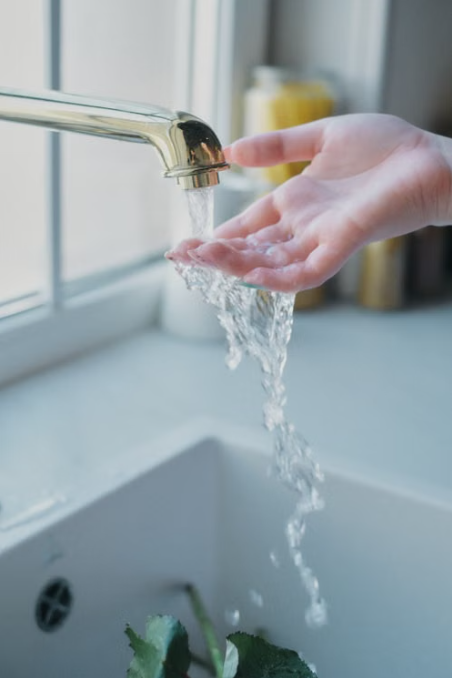
And there’s one more distinction that’s particularly important: a rotten egg odor associated with the water is not something you should automatically assume is the same as a possible natural gas odor.
We’ll get to that.
But first, if the strange smell clearly seems connected to your hot water, the Water Heater Repair and Replacement team at A+ Drain Cleaning and Plumbing can help Nampa homeowners determine what’s happening. A+ specifically lists water quality issues among the signs that a water heater may need attention.
Before Blaming the Water Heater, Try Something Simple
You don’t need tools.
You don’t even need to open a cabinet.
Try the cold water.
Let it run for a moment.
Smell it.
Then turn it off and try the hot water.
Is there a noticeable difference?
Now do the same thing somewhere else in the house.
Try the kitchen.
Another bathroom.
Maybe the laundry sink if you have one.
You’re looking for a pattern.
If the smell happens only at one sink, that’s useful.
If every hot water faucet smells strange while the cold water seems perfectly normal, that’s useful too.
You’re not trying to diagnose the plumbing yourself.
You’re simply figuring out whether the smell follows the fixture or follows the hot water.
That’s a much better place to start than cleaning the same drain four more times.
Sometimes We Blame the Drain Because That’s Where Our Nose Is
It makes sense.
You’re standing over the sink.
You smell something terrible.
There’s a drain six inches from your face.
Case closed.
Except sometimes it isn’t the drain.
Here’s an easy experiment.
Fill a clean glass with water and move away from the sink.
Does the water itself smell?
If the smell seems to stay at the sink instead, the drain may deserve another look.
A+ notes that unpleasant sewage odors can be one sign that professional drain cleaning is needed, especially when they appear alongside slow drainage or unusual pipe noises.
But if the water in your glass carries the smell across the room with you, you’ve learned something different.
The odor may actually be in the water.
That distinction can save a surprising amount of unnecessary drain scrubbing.
What Does the Water Heater Have to Do With the Smell?
If only the hot water smells, naturally the water heater becomes one of the places worth investigating.
Traditional tank water heaters store heated water.
That means water can sit inside the tank rather than simply passing through on demand.
Under certain conditions, reactions inside the tank can create that sulfur like rotten egg odor homeowners notice at the faucet.
One component plumbers may inspect is the water heater’s anode rod.
You don’t need to know exactly how it works to understand the basic idea.
The rod is there to help protect the tank from corrosion.
Depending on the water chemistry and conditions inside the heater, however, reactions involving the water, bacteria, and components within the tank can contribute to unpleasant odors.
That doesn’t mean you should immediately buy an anode rod because your bathroom smelled strange once.
It means the water heater gives a plumber another place to investigate when only hot water is affected.
And No, Cleaning the Sink Again Won’t Fix That
This is where homeowners can lose an entire weekend.
Clean sink.
Smell returns.
Clean drain.
Smell returns.
Buy another cleaning product.
Smell returns.
Eventually, someone pours something down the drain that makes the bathroom smell like lemons and rotten eggs at the same time.
Not exactly an improvement.
If the odor is actually coming through the hot water supply, cleaning the drain won’t change what’s inside that water.
That’s why the hot versus cold test is so helpful.
It’s simple, but it changes the direction of the investigation.
What If Hot and Cold Water Both Smell?
Now the water heater becomes a less complete explanation.
If the odor is present in cold water too, you have to think beyond something that only affects heated water.
Where does the home’s water come from?
Municipal supply?
A private well?
Does every faucet smell?
Did the problem begin suddenly?
Are neighbors noticing anything similar?
Water quality issues aren’t something you want to diagnose based entirely on smell.
If you’re concerned about the water entering the home, testing and appropriate treatment may be needed.
A+ offers Water Treatment Services in Nampa, including whole house filtration, point of use systems, water softening, reverse osmosis, and well water filtration options. Their site also notes that some Idaho properties rely on private wells and may benefit from filtration depending on their water conditions.
That’s another reason the first question matters so much.
Hot only?
Or hot and cold?
Two very different conversations.
If You Have a Well, Don’t Guess About Water Quality
Homes on private wells have a little more responsibility when something about the water suddenly changes.
An unusual odor may come from naturally occurring conditions, bacterial activity, or another water quality issue.
The important part is not deciding by smell alone whether the water is safe.
If the odor affects both hot and cold water, especially from multiple fixtures, appropriate water testing can help determine what is actually present.
The nose is a great warning system.
It’s not a laboratory.
A+ specifically includes well water filtration among its water treatment options for Idaho properties that rely on private wells.
Hard Water Is Another Part of the Nampa Conversation
If you’ve lived around Nampa for a while, hard water probably isn’t news.
You see the evidence.
White buildup around faucets.
Water spots on glass.
Scale on showerheads.
That cloudy film that seems determined to come back after cleaning.
A+ identifies Nampa as an area known for hard water and explains that calcium and magnesium can contribute to buildup and plumbing problems.
We’ve also covered this in Can Hard Water Damage Your Appliances Over Time in Nampa ID?
That blog is worth linking here because the water heater is one of those appliances constantly dealing with the water entering your home.
Hard water itself isn’t the same thing as a rotten egg odor.
But water chemistry, mineral buildup, water heater condition, and water quality can overlap enough that looking at the entire situation makes more sense than treating each symptom in isolation.
Did the Smell Start After the Water Heater Sat Unused?
This is another question worth asking.
Maybe you were away for several weeks.
Perhaps the property sat vacant.
Or this is a seasonal home that wasn’t being used regularly.
Then everyone comes back, someone turns on the hot water, and the smell is awful.
That timing matters.
Water that sits inside plumbing equipment for extended periods creates different conditions from water being used constantly by a busy household.
Again, that doesn’t tell you exactly what caused the odor.
But tell the plumber.
“When we came back from vacation, the hot water smelled strange.”
That’s much more useful than simply saying:
“The sink stinks.”
What If the Water Heater Is Making Noise Too?
Now we have another clue.
Maybe the hot water smells odd.
And recently you’ve heard popping from the water heater.
Or rumbling.
Maybe it seems louder after someone showers.
We just covered this in Why Does My Water Heater Make Popping or Banging Noises?
That’s a perfect internal link here because sediment and mineral buildup can affect the condition and performance of tank style water heaters.
A+ also lists strange water heater noises, rust colored water, temperature fluctuations, leaks, and visible corrosion among the signs that a heater may need repair.
One symptom doesn’t necessarily explain the other.
But if the heater suddenly smells different, sounds different, and produces water differently, you definitely have more information to work with.
Take a Look Around the Water Heater
You don’t need to dismantle anything.
Just look.
Is the floor dry?
Do you see rust?
Any staining?
Is there moisture around a connection?
Does the tank itself show visible corrosion?
A strange smell plus a leaking water heater is a very different situation from odor alone.
A+ lists leaking and visible corrosion among warning signs for water heater service.
And if you’re seeing unexplained moisture elsewhere in the home, their Leak Detection Services are another relevant resource.
Don’t start taking the heater apart.
Observation is plenty.
There’s One Rotten Egg Smell You Should Treat Differently
This part is important.
Natural gas is intentionally odorized so people can detect leaks, and that odor is often described as rotten eggs or sulfur.
So if you’re smelling rotten eggs around a gas appliance, gas line, water heater area, or inside the home independent of the running water, do not assume this blog’s hot water explanation applies.
A water odor and a possible gas odor are not the same troubleshooting situation.
If you suspect a gas leak, avoid flames or anything that could create a spark, leave the area, and contact the gas utility or emergency services from a safe location.
A+ also provides gas line repair services, but a suspected active gas leak should be treated as an immediate safety concern rather than something to casually investigate yourself.
That distinction matters.
If the smell is clearly coming from a glass of hot water, that’s one path.
If the room itself smells like gas whether the faucet is running or not, that’s another.
What If the Water Looks Strange Too?
Smell is one thing.
Discoloration adds another piece.
Maybe the hot water looks rusty.
Yellowish.
Cloudy.
Or simply different from the cold water.
Don’t ignore that detail.
A+ specifically lists rust colored water as one of the signs that can accompany water heater problems.
Fill two clear glasses.
One cold.
One hot.
Compare them.
Again, you’re not trying to become a water quality expert.
You’re giving the plumber useful information.
Sometimes the smallest observations save the most guessing.
Does the Water Heater Need to Be Replaced?
Not automatically.
This is where online searching can send people straight to the most expensive conclusion.
Rotten egg smell?
New water heater.
Not necessarily.
The age of the heater matters.
Its condition matters.
The source of the odor matters.
Your water chemistry matters.
Whether the smell affects only hot water matters.
Whether the tank is leaking or corroded matters.
A+ works on both conventional and tankless water heaters and provides repair, maintenance, replacement, and installation services.
Sometimes repair or maintenance makes sense.
Sometimes water treatment deserves attention.
Sometimes an aging heater has enough other problems that replacement becomes the practical choice.
But you want that decision based on what’s actually happening, not one unpleasant shower.
Don’t Forget the Other Hot Water Clues
We’ve been building a useful water heater content cluster because homeowners rarely experience just one perfectly isolated symptom.
Maybe the smell is new.
But hot water has also started taking longer to reach the bathroom.
We’ve covered that in Why Does My Hot Water Take So Long to Reach the Faucet?
Perhaps the water heater has become noisy.
That’s our popping and banging water heater blog.
Maybe hard water deposits are appearing everywhere.
That’s where Can Hard Water Damage Your Appliances Over Time? fits.
These aren’t interchangeable problems.
But linking them helps homeowners follow the symptoms they’re actually seeing rather than forcing every reader toward the same answer.
What A+ Drain Cleaning and Plumbing Will Want to Know
You don’t need to call and say:
“I believe my anode rod is reacting with sulfate reducing bacteria.”
Please don’t feel like you need to diagnose it first.
Just tell them what happened.
Does only the hot water smell?
What about cold water?
One faucet or the whole house?
Municipal water or a private well?
Did the smell begin after the home sat unused?
Is the water discolored?
Is the water heater making unusual noises?
Any leaking or corrosion?
Does the odor seem to come from the actual water or only from the drain?
Those answers are much more useful than a guess.
If the problem appears to involve the heater, A+ Water Heater Repair and Replacement is the natural place to start. If it appears to involve the home’s broader water quality, their Water Treatment Services may be more relevant.
Frequently Asked Questions
Why does only my hot water smell like rotten eggs?
If the odor appears only with hot water at multiple fixtures, conditions inside a tank style water heater may be involved. The heater and the home’s water quality should be evaluated before assuming the cause.
Why does my bathroom sink smell but the water seems fine?
The odor may be coming from the drain rather than the water. A+ notes that sewage odors can accompany drain buildup and other drainage problems. Their Drain Cleaning Services are relevant when the odor stays at the drain.
What if both my hot and cold water smell?
That can point away from a problem limited solely to the water heater. Water source and water quality should be considered, particularly for properties using private wells.
Can hard water cause a rotten egg smell?
Hard water and sulfur type odors are different issues. However, Nampa’s hard water can contribute to mineral buildup in plumbing and water using equipment, so the overall water quality may still deserve attention.
Does rotten egg smelling hot water mean I need a new water heater?
Not necessarily. The heater’s age, condition, water chemistry, maintenance history, and the actual source of the odor should be evaluated first.
What if I smell rotten eggs near my gas water heater even when no water is running?
Treat a possible natural gas odor differently from smelly hot water. Leave the area and contact your gas utility or emergency services from a safe location if you suspect a gas leak.
When should I call a plumber?
If the odor keeps returning, affects several hot water fixtures, appears alongside discoloration, unusual water heater noises, leaking, corrosion, or other plumbing changes, professional inspection is a sensible next step.
Final Thoughts
Nobody expects clean water to smell like rotten eggs.
That’s why the first reaction is usually confusion.
You clean the sink.
Then the drain.
Then the shower.
Maybe you start wondering whether something died behind the wall.
And sometimes the most useful clue turns out to be incredibly simple.
Cold water smells fine.
Hot water doesn’t.
That little observation changes the whole conversation.
The same is true if the smell follows you from the bathroom to the kitchen.
Or if both hot and cold water smell.
Or if the water heater has started rumbling at the same time.
Pay attention to the pattern.
You don’t have to know what it means yet.
That’s what the inspection is for.
And remember the important safety distinction: if the odor seems to be coming from the room, a gas appliance, or a gas line rather than specifically from the water, treat a possible gas leak as an urgent safety issue.
For an odor clearly associated with your home’s hot water, A+ Drain Cleaning and Plumbing can help determine whether the water heater, water quality, or something else is responsible.